Civil Air Support has once again put volunteer aviation at the service of wildlife conservation, flying six young white-tailed eagles from the Scottish Highlands to Exmoor ahead of their landmark release into the National Park.
The mission, completed in mid-June 2026, supported the continuing white-tailed eagle reintroduction programme led by Forestry England and the Roy Dennis Wildlife Foundation, working with Exmoor National Park Authority. It marked a new chapter for the project: these were the first white-tailed eagles to be reintroduced on Exmoor after the species disappeared from the area through persecution more than 200 years ago.
A carefully planned flight
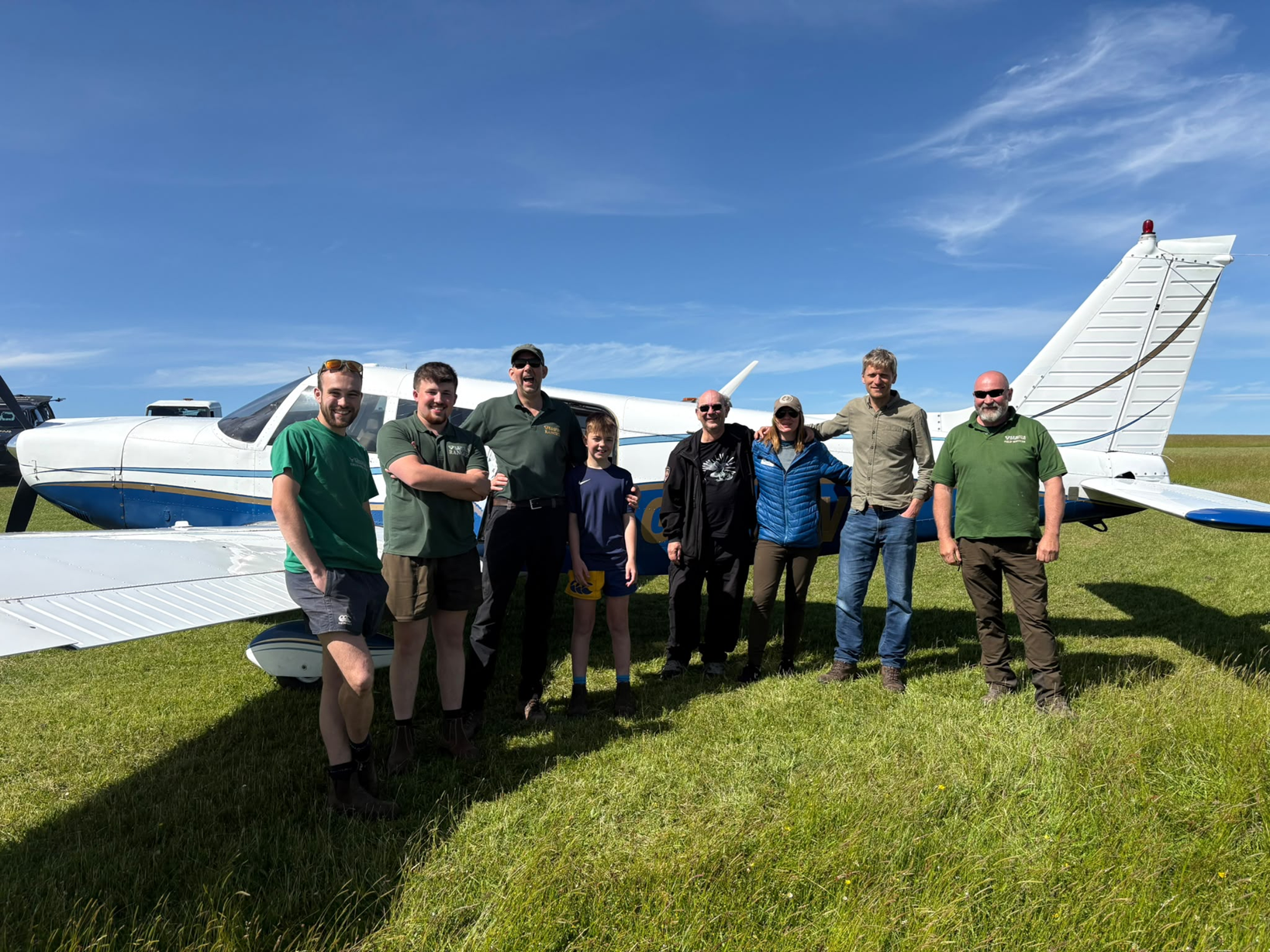
Civil Air Support pilot and Operations Manager Graham Mountford flew a specially prepared PA-32-300 from Turweston to Inverness, where the six eagle chicks and Roy Dennis Wildlife Foundation representative Zoë Smith joined the aircraft. The rear seats had been removed to provide the space needed for the birds’ secure transport.
From Inverness, the aircraft flew directly to a private landing site on Exmoor. The mission was conducted in visual flight conditions and required close coordination between Civil Air Support, the conservation team and rangers waiting on the ground. After safely delivering the birds and their handler, Graham returned the aircraft to Turweston. Total flying time for the operation was seven hours and five minutes.
Using a light aircraft greatly reduced the journey time compared with a long road transfer. That speed and efficiency helped minimise the time the young birds spent in transit and enabled a direct handover to the specialist team responsible for their care. Civil Air Support also thanks Highland Aviation, which generously waived its handling charges in Inverness in support of the mission.
From Scotland to the skies above Exmoor
After arriving on Exmoor, the eagles were cared for by experts while they became familiar with their new surroundings. Before release, each bird was fitted with a satellite tracker so the project team can follow its movements and monitor its progress. The six young eagles were released in July and are expected to range widely across the UK and potentially into Europe before returning to settle and breed when they are four or five years old.
Exmoor was selected as an additional release area after tracking data showed that several eagles from the existing Isle of Wight programme had already visited the region. Its combination of coast, woodland and abundant fish offers suitable foraging and breeding habitat. Under the current licence, up to 20 young white-tailed eagles may be released on Exmoor over three years, helping to strengthen the developing population and extend its range into South West England.
Volunteer aviation supporting nature recovery
The flight builds on Civil Air Support’s previous support for the southern England reintroduction programme. In 2025 the charity reported its role in carrying another group of young eagles from Scotland to the Isle of Wight, where releases begun in 2019 have already led to birds forming territories and breeding in the wild.
By bringing together volunteer pilots, suitable aircraft and careful operational planning, Civil Air Support can provide charities and public-interest organisations with rapid transport when time, distance or difficult logistics make conventional options less suitable. In this case, that capability helped six remarkable passengers complete the first stage of a journey that will, it is hoped, see white-tailed eagles once again become an established presence across the South West.
Graham Mountford, Operations Manager and pilot, Civil Air Support:
“Transporting these young eagles safely from the Highlands to Exmoor was a privilege. Missions like this show how volunteer aviation can solve a practical transport challenge while making a direct contribution to an ambitious conservation programme. Everyone involved understood that the welfare of the birds came first, and it was extremely rewarding to see the careful planning come together.”